

Most people do not call a tree service because they are excited to remove a tree.
They call because something does not look right.
A tree never leafed out. A trunk split during a storm. Large limbs are hanging above a roof, fence or driveway. A declining tree is standing too close to a home, sidewalk or commercial property.
Sometimes the concern is obvious. Other times, the property owner simply has a feeling that a tree should be evaluated before the situation becomes more serious.
That is where good tree service starts.
At Unlimited Tree Service, our job is not simply to arrive with equipment and start cutting. We look at the tree, the surrounding property, access limitations and the concerns of the customer. Then we explain what we see, what the work may involve and how we plan to protect the areas around it.
The before-and-after photos may show the most visible transformation, but much of the important work happens between those two pictures.
These five recent projects offer a closer look at what thoughtful, professional tree work looks like for homeowners, commercial property owners and property managers throughout Central Iowa.
1. Dead Tree Removal in a Tight Residential Space
When There Is Little Room, Every Cut Matters
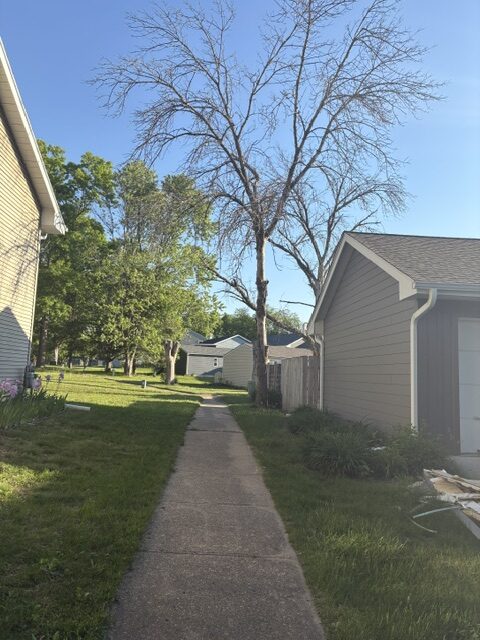
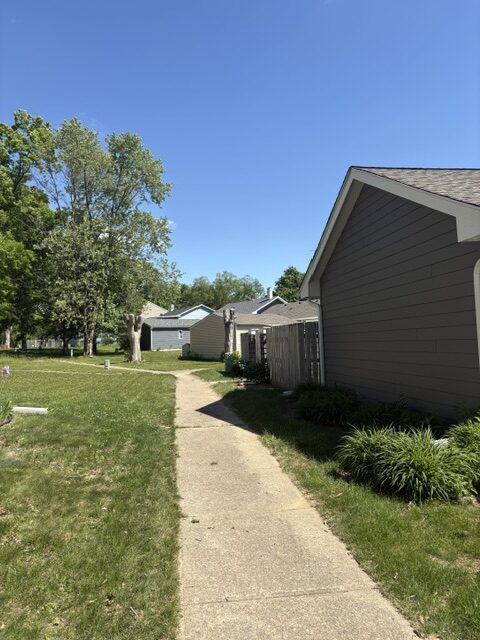
This dead tree was standing beside a narrow walkway between residential buildings. Garages, fencing, landscaping and a frequently used path were all within a short distance of the trunk.
There was no open area where the tree could simply be dropped.
Before beginning, the crew had to consider how each section would be accessed, cut and controlled. Dead wood can become brittle as it continues to deteriorate, making it especially important to avoid assumptions about how the tree will react once work begins.
The goal was not only to remove the tree. It was to do so without damaging the surrounding buildings, fence, walkway or lawn.
Once the work was complete, the dead tree was gone, the path was fully open and the property was left clean and usable.
For the people living around the work area, that clean finish matters. So does knowing what equipment will be used, where the crew will need access and what the property will look like when the job is finished.
Project Takeaway
A dead tree may remain standing for a while, but that does not mean it is structurally dependable. An early evaluation can provide more time to plan the work instead of waiting until the tree becomes an urgent problem.
2. Removing a Split and Storm-Damaged Tree
Visible Damage Was Only Part of the Concern
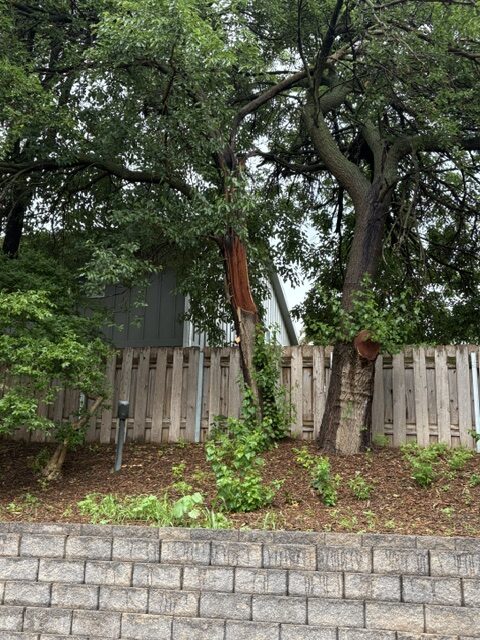
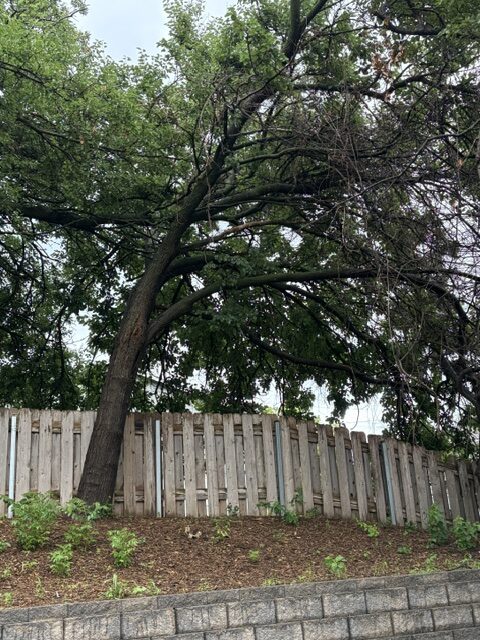
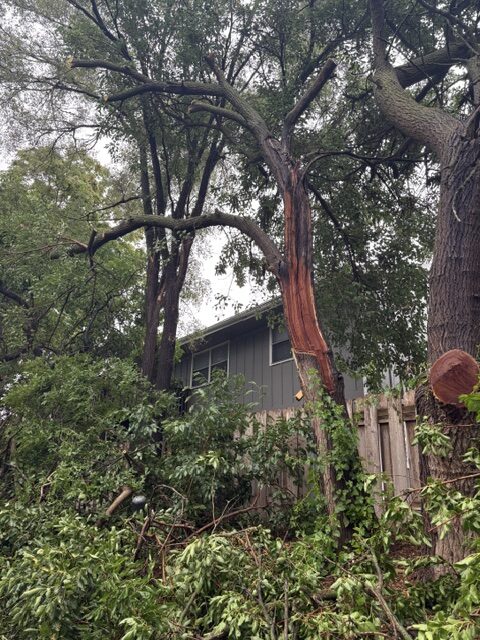
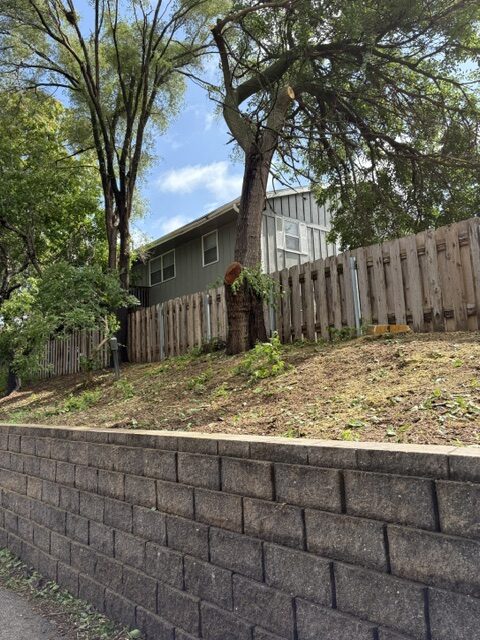
A major split had opened the trunk of this tree, exposing the interior wood and leaving broken portions of the canopy above a fence, retaining wall and neighboring property.
The sloped terrain made the project more complicated. Heavy branches and damaged trunk sections needed to be controlled so they did not strike the fence, wall, home or surrounding landscape.
Storm-damaged trees can carry weight in unexpected ways. A partially broken limb may still be connected under tension. A split trunk may appear stable from one side while continuing to separate internally.
That is why storm cleanup should begin with an evaluation—not a guess.
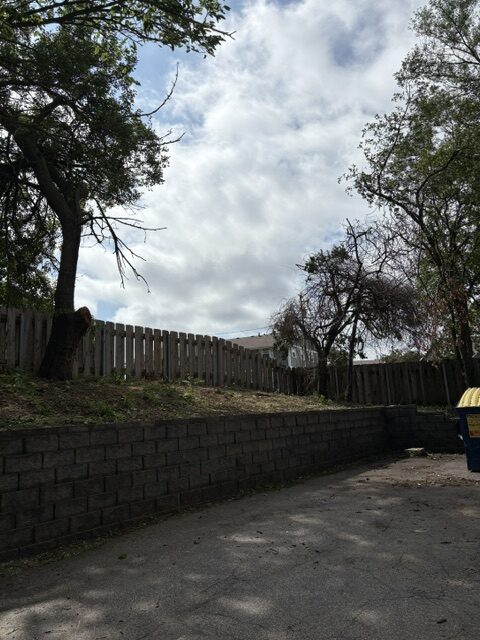
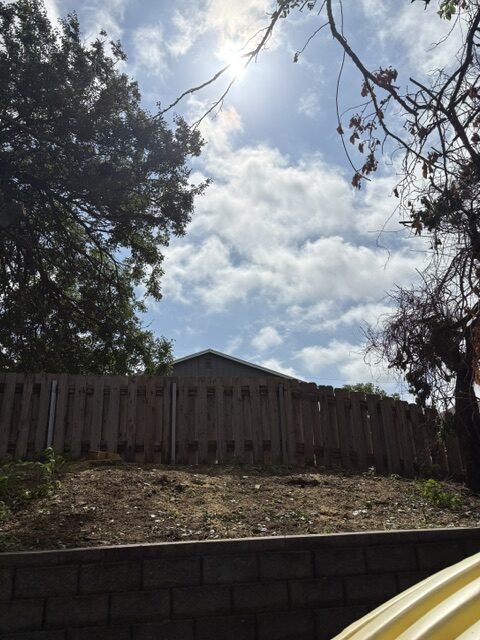
The crew carefully dismantled the damaged portions, managed the debris on the slope and worked around nearby trees and established landscaping. When the project was complete, the unstable tree material had been removed and the fence line was open again.
The result was a safer, cleaner property without treating every tree in the area as if it needed to come down.
Project Takeaway
A dead tree may remain standing for a while, but that does not mean it is structurally dependable. An early evaluation can provide more time to plan the work instead of waiting until the tree becomes an urgent problem.'
3. Large Tree and Stump Removal Near a Residential Street
Planning for the Tree—and Everything Around It
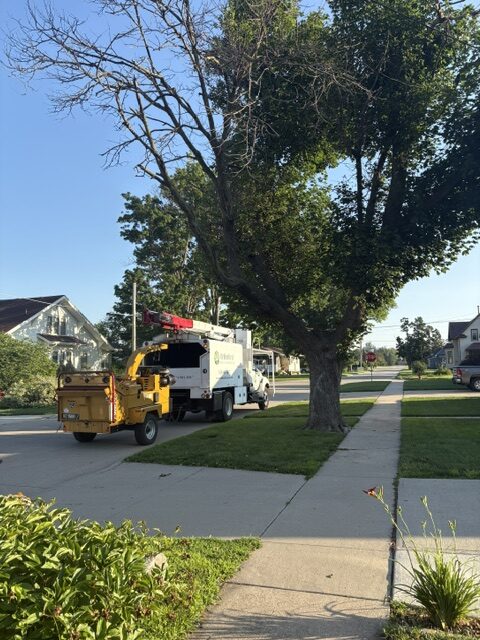
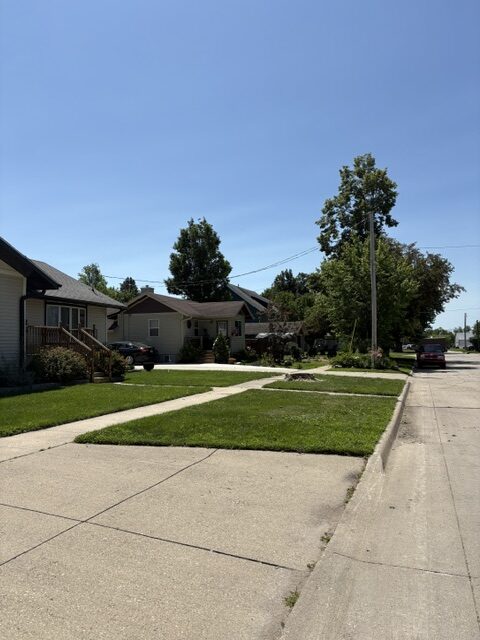
This large street-facing tree showed substantial decline throughout its upper canopy.
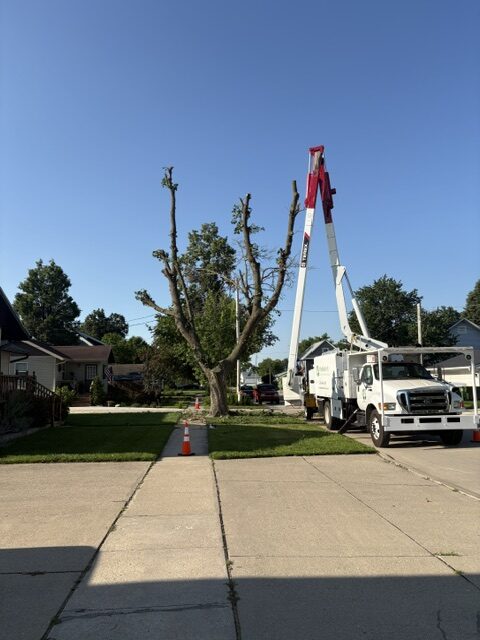
Its location added several considerations. The tree stood close to a sidewalk, driveway, road, neighboring homes and overhead utility lines. Equipment needed to be placed carefully, and the removal sequence had to account for vehicles, pedestrians and nearby property.
A bucket truck allowed the crew to access the upper canopy and begin dismantling the tree from the top down. Removing the upper limbs first reduced the tree gradually and kept the work controlled.
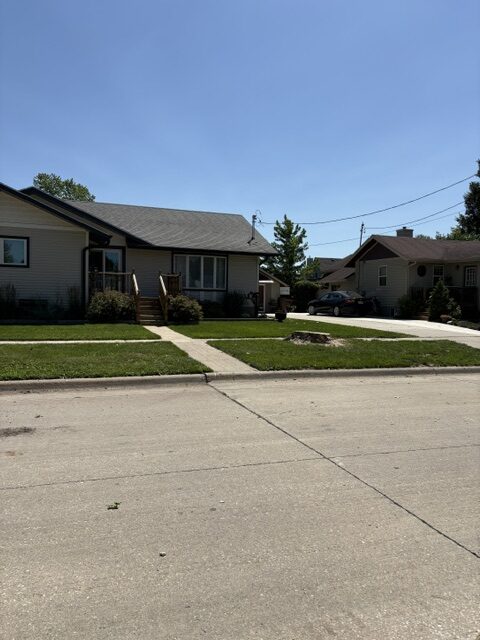
After the main tree removal, the stump was also removed and the site was cleaned.
The final photos show more than an empty space. They show a front yard that is open, usable and ready for the homeowner’s next step without a large stump, brush pile or unfinished work area left behind.
That is an important part of customer service. Before the project begins, customers should understand what the estimate includes, how the property will be accessed and what cleanup will look like.
Project Takeaway
The finished result should match the scope discussed before work begins. Tree removal, stump removal and debris cleanup are separate parts of a project, and customers deserve to know exactly what is included.
4. Carefully Dismantling a Large Mature Tree
Large Tree Removal Should Be Methodical, Not Rushed
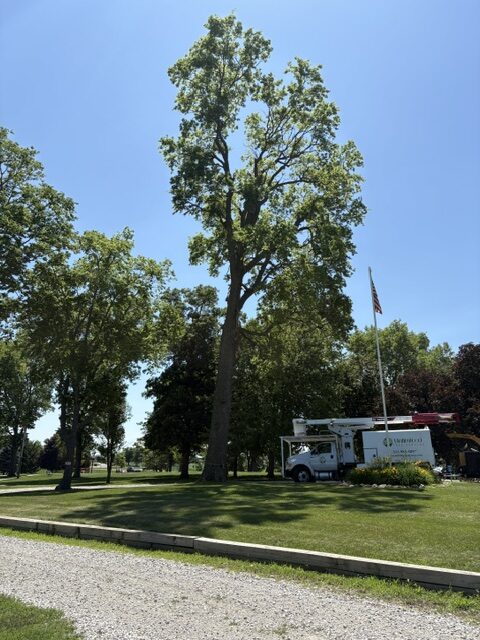
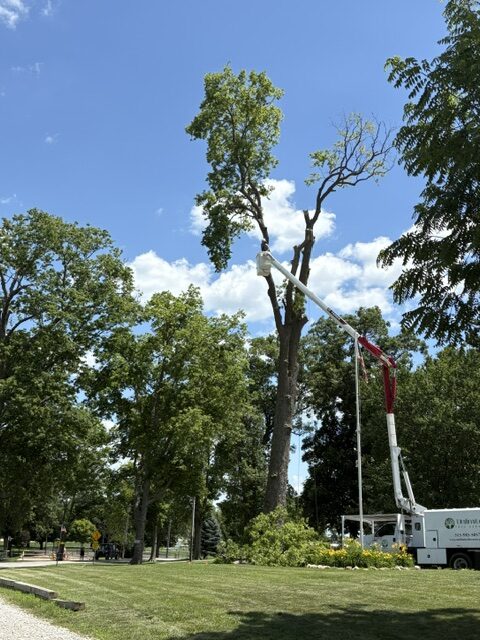
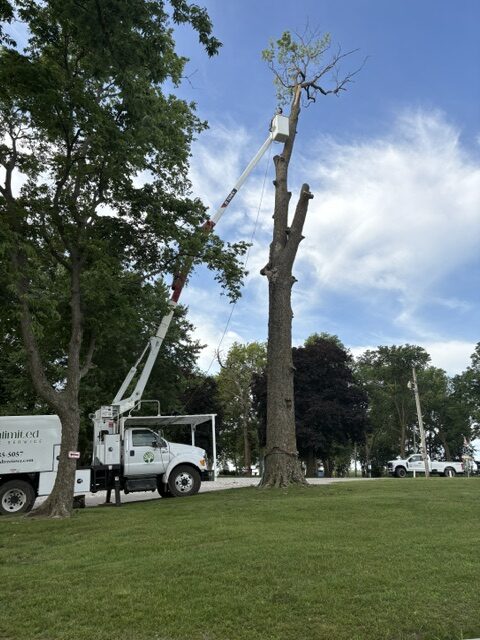
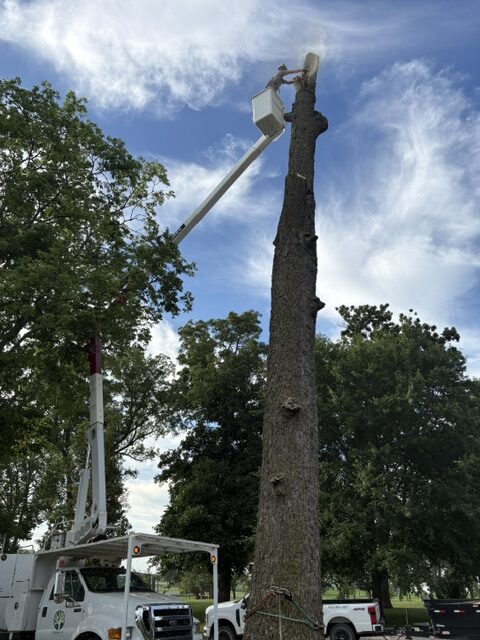
This mature tree had extensive decline in the upper canopy and required aerial equipment to reach the highest sections safely.
Although the surrounding property offered more room than some residential projects, the size and weight of the tree still required a carefully planned removal sequence.
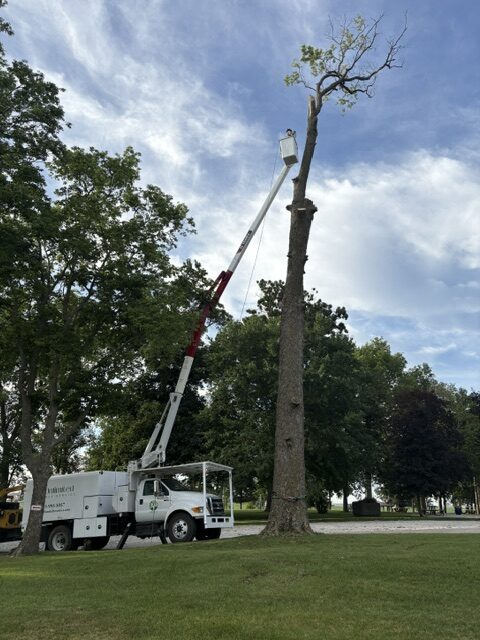
The crew began at the top, removing limbs and reducing the canopy one section at a time. Once most of the upper growth had been removed, the remaining trunk could be prepared for the next stage of the project.
This is the part of tree removal customers do not always see.
Large trees are rarely handled in one dramatic cut. The safer and more practical approach is often gradual: establish the work zone, position the equipment, remove the canopy, reduce the trunk and manage each piece as it comes down.
For commercial properties, HOAs and larger sites, planning also includes minimizing disruption. Equipment access, employee or resident traffic, schedules, landscaping and cleanup all need to be considered.
A successful project is not only about completing the work. It is also about keeping the property functional and communicating clearly throughout the process.
5. Dead Backyard Tree Removal Near a Home
Protecting the Yard Is Part of the Job
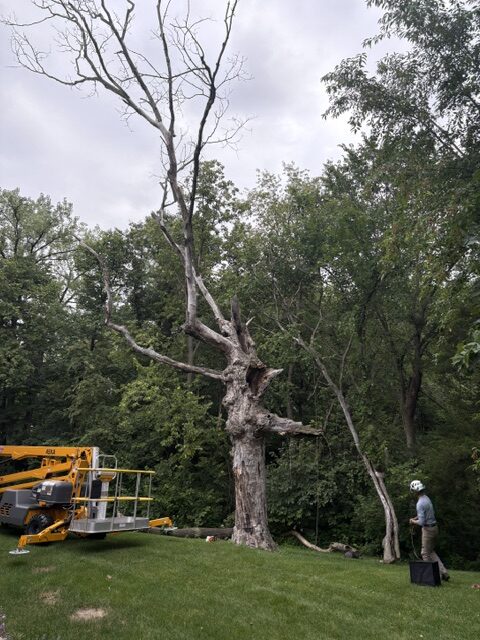
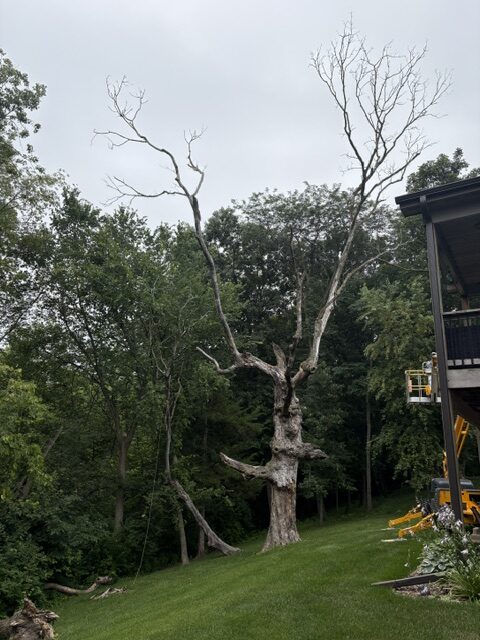
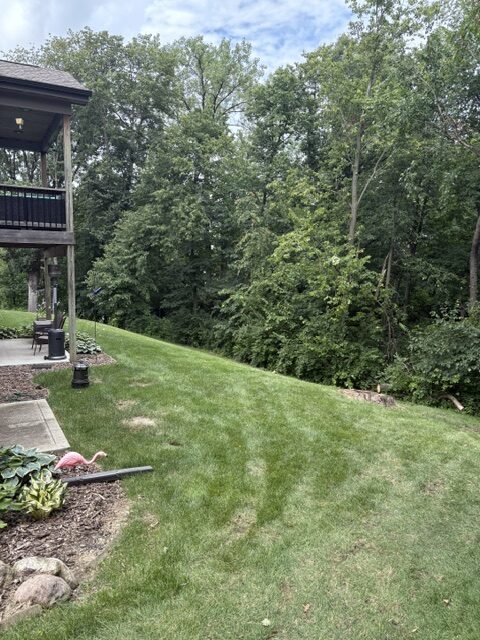
This large dead tree stood in a maintained backyard near the home, deck, landscaping and edge of a wooded slope.
Backyard tree removal often creates a different set of customer concerns.
Will large equipment damage the lawn? How will the crew reach the tree? What will happen to nearby plants? Will limbs or debris be left behind? How much of the yard will be disrupted?
Those are reasonable questions, and they should be answered before the project begins.
For this removal, the crew planned equipment access around the home and landscape, dismantled the tree and cleared the resulting debris. The finished photo shows an open lawn, an unobstructed view and surrounding woods that remained undisturbed.
The tree was removed, but the rest of the property still looked and felt like the customer’s yard.
Project Takeaway
The tree may be the focus of the project, but it is never the only part of the property that matters. Access, turf, landscaping, structures and cleanup should all be included in the plan.
The Finished Yard Is Only Part of the Job
Before-and-after photos are useful because they make the result easy to see.
What they do not always show is whether the customer understood the plan, whether the crew arrived prepared, whether the surrounding property was respected or whether the site was fully cleaned when the work was done.
At Unlimited Tree Service, we believe those details are part of professional tree care.
An Honest Assessment
Not every tree concern automatically calls for complete removal. Depending on the condition and goals for the property, the practical recommendation may involve pruning, monitoring, storm-damage cleanup or removal.
Our responsibility is to explain what we see and help the customer understand the available options.
The Right Equipment
Tight backyards, steep slopes, large trees and roadside locations do not require the same approach. Matching the equipment and crew to the property helps the work move more safely and efficiently.
Respect for the Entire Property
The tree is only one part of the work area. Homes, businesses, sidewalks, fences, lawns, retaining walls, landscaping and neighboring properties all need to be considered.
Clear Communication
Customers should not be left wondering when the crew will arrive, how the tree will be accessed or what the estimate includes. We want homeowners and property managers to understand the plan before work begins.
Thorough Cleanup
A clean after photo should reflect a clean customer experience. Brush, wood and work debris should be handled according to the agreed-upon scope so the property is ready to use again.
When Should You Have a Tree Evaluated?
Consider scheduling a professional tree evaluation when you notice:
- A tree that does not leaf out with the surrounding trees
- Large dead branches in the canopy
- A visible crack or split in the trunk
- Hanging or partially broken limbs
- New leaning after a storm
- Exposed roots or movement near the base
- Fungal growth or significant decay around the trunk
- Branches resting on or growing directly above structures
- A tree interfering with sidewalks, parking areas or property access
You do not need to know exactly what is wrong before calling.
That is what the evaluation is for.
Tree Service for Homes, Businesses and Managed Properties
One backyard tree and an ongoing commercial tree-care plan are different projects, but both require the same fundamentals: experience, honest communication, appropriate equipment and respect for the property.
Unlimited Tree Service works with homeowners, businesses, HOAs and property managers throughout Central Iowa. Whether you are concerned about a single dead tree, recent storm damage or several trees across a larger property, our team will take a closer look and explain a practical path forward.
Contact Unlimited Tree Service to schedule your tree evaluation. We will look at the tree, consider the entire property and help you understand what should happen next.